
Category: Blog

  • Matching the Art to the Heart: Why Age Matters in Illustrations

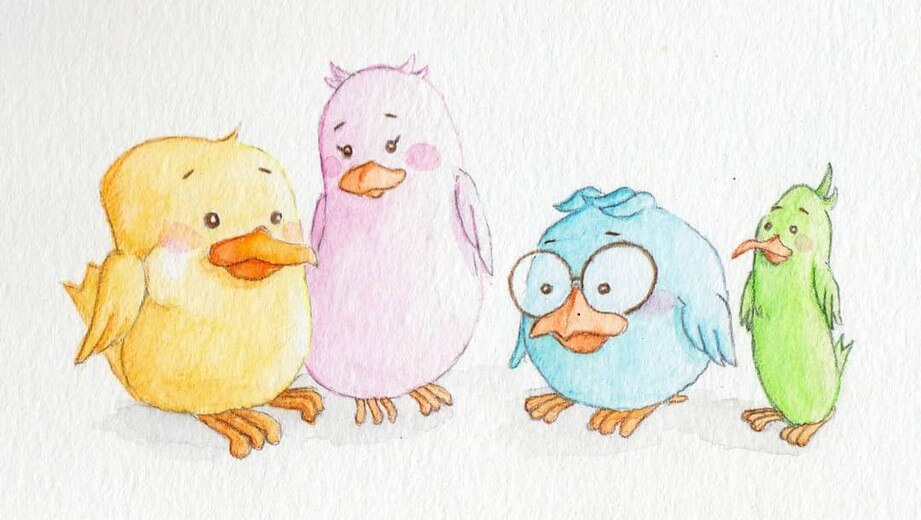
    A bird family

    Let’s be honest. Handing a toddler a detailed medical diagram is a bad move. It won’t spark an early career in surgery. It will probably just end up as a soggy, colorful snack. Why? Because kids’ brains are like sponges that grow in specific stages. What delights a ten-year-old might totally baffle a two-year-old.

    At Choppic, we believe illustration is a language. Consequently, you have to speak the right dialect for your audience. It is more than just drawing “cute” things. It is about understanding visual development. It is about knowing how much information a young brain can handle at once.

    Matching the art to the reader’s age is a science and an art. Let’s break down how we adjust our brushstrokes for every stage of growing up.

    Board Books: Big, Bold, and Beautifully Simple (Ages 0-3)

    First, let’s talk about the tiny humans. Babies and toddlers are still figuring out how eyes actually work. Their vision is literally developing as they flip the pages. Therefore, high contrast is your best friend.

    Think bold colors and thick, sturdy lines. Shapes should be clear and very simple. For instance, a “dog” shouldn’t have every individual hair rendered. A friendly silhouette and two big, expressive eyes work much better.

    Furthermore, babies are obsessed with faces. They look for emotions they can recognize in the real world. They want to see “happy,” “surprised,” or “sleepy.” Basically, if it looks like a friendly face, they are in love.

    Anyway, keep the background clean. Too much clutter makes it hard for them to focus. You want them to bond with the main character. You don’t want them getting lost in the detailed wallpaper pattern behind the cat. Also, let’s not forget the “chew factor.” These illustrations need to be readable even through a layer of toddler drool!

    Early Picture Books: The Sweet Spot of Discovery (Ages 3-5)

    Next, we hit the golden age of discovery. Children in this range are becoming visual detectives. They love to linger on a page. They want to find the secrets hidden in the corners.

    This is where I start tucking in those “heuristic” details I love. I might hide a tiny ladybug under a leaf. Or perhaps a small toy peeking out from under a bed. These little surprises invite them to explore. It makes them active participants in the story.

    However, the art still needs to guide the eye. We use composition to lead them to the most important part of the page. The characters can have more complex expressions now. We can explore nuanced feelings like “frustration” or “excitement.”

    Actually, the connection between words and art must be ironclad here. The pictures should tell the whole story alone. A child should understand the plot even if the adult stops reading. If the text says “he felt brave,” the art should show the cape fluttering and the chin held high.

    Advanced Picture Books: Bridging the Gap (Ages 5-8)

    As kids start school, their attention spans get a serious upgrade. Suddenly, they can handle more complex layouts. We can use multiple panels on one page to show a sequence of events.

    In addition, the themes can become a bit more daring. Maybe the monster is a little scarier. Or the forest feels a bit more mysterious. Consequently, the art style can become more textured and layered. I love using digital brushes that mimic real paint to add “weight” to the world.

    Transitioning from simple pages to detailed spreads is a big step. It prepares them for the world of chapter books. Therefore, we ensure the art feels like a bridge to the next level of storytelling.

    Middle Grade: Sophisticated and Story-Driven (Ages 8-12)

    By this age, readers feel like “big kids.” They want art that respects their maturity. Interior illustrations here are often black and white, which feels more sophisticated.

    The style can become much more atmospheric. For instance, I might use heavy cross-hatching or moody digital shading. These readers appreciate visual metaphors. They don’t need the art to mirror the text exactly. Instead, the art should add a new layer of mood.

    Basically, it is about complementing the world they are already building in their heads. They want to be challenged. They certainly don’t want to be talked down to. A “cartoonish” style might turn them off. They prefer something that feels “cool,” “edgy,” or deeply artistic.

    Why This Matters for Your Project

    If you are an author, you might wonder why I obsess over this. Well, the wrong art style can actually push your audience away. An art style that is “too babyish” will offend a nine-year-old. Conversely, an art style that is “too busy” will overwhelm a three-year-old.

    As an illustrator, my goal is to find that perfect balance. I want to make sure the visuals match your target reader’s developmental stage. This builds trust with parents and keeps kids engaged.

    At the end of the day, I want every reader to feel seen. Whether it is a bright board book or a moody middle-grade novel, the art should feel like home. It is about meeting young readers exactly where they are on their journey. We want to spark joy and curiosity, not confusion. And maybe, just maybe, we can keep the books out of their mouths!

  • The Juggling Act: Mastering Time as a Freelance Illustrator

    Let’s be honest. Being a freelance illustrator isn’t just about drawing. It’s about being your own art director, marketing manager, accountant, and project manager, all at the same time. The to-do list seems to grow longer by the minute. You’ve got an illustration to finish, a client email to answer, a contract to review, and probably a stack of dishes waiting. How do you possibly manage it all without dropping the ball?

    The secret isn’t to work faster. It’s to work smarter. For me, that means mastering the art of the juggling act. It’s not about doing everything at once. It’s about knowing how to handle each project with intention, one after another, to get everything done on time.

    An octopus doing multiple illustration-related works.

    Strategic Multitasking: The Secret to Juggling Projects

    The word “multitasking” gets a bad rap. People often think it means having ten apps open and trying to do everything at the same moment. That’s a recipe for burnout! For me, strategic multitasking is about using my time efficiently by switching between projects when it makes sense. It’s like being a chef with multiple dishes on the stove. You don’t cook them all at once, but you work on one while another is simmering.

    For example, when I send a client a rough sketch, I know it might be a day or two before I get feedback. Instead of just waiting, I’ll switch my focus to another project. Maybe I’ll work on a character study for a new book or respond to a few marketing emails. By the time I’ve made some progress on those tasks, the client’s feedback is probably waiting in my inbox. This approach keeps me moving and ensures I’m always making progress on something.

    The Power of Smart Planning

    You can’t juggle without a plan. I break down every project into smaller, manageable chunks. Instead of just writing “finish illustration,” I’ll write “sketch characters,” “finalize pencil sketch,” “add base colors,” and so on. This makes the work feel less overwhelming. It also helps with setting realistic deadlines.

    • Break It Down: A giant deadline for a whole book can be scary. Instead, focus on a deadline for one spread, or even just a character. This makes the work feel manageable and gives you a win along the way.
    • Prioritize: Not all tasks are created equal. I figure out what’s most urgent and what’s most important, and I tackle those things first. A happy client is always the top priority!

    Don’t Forget to Breathe (and Track Your Time)

    Even with all the best strategies, you can’t run on empty. Time management isn’t just about productivity; it’s about avoiding burnout. I try to be mindful of how long certain tasks take. Time-tracking tools can be a lifesaver here. They help you see where your hours are really going. You might be surprised! This info helps you give more accurate quotes and manage your schedule better in the future.

    And remember to take breaks. Step away from the screen, stretch, go for a walk. Sometimes, the best way to move forward is to take a step back. Saying “no” to new projects is also a part of this. Your time is valuable. It’s okay to protect it.

    At the end of the day, time management for a freelance illustrator is all about being the CEO of your own creative business. With a little bit of strategy and a lot of smart planning, you can handle the juggle with confidence and still find time to do the one thing you love most: create.

  • The Magic of Children’s Books: Where Every Page is a Party and a Powerful Message!

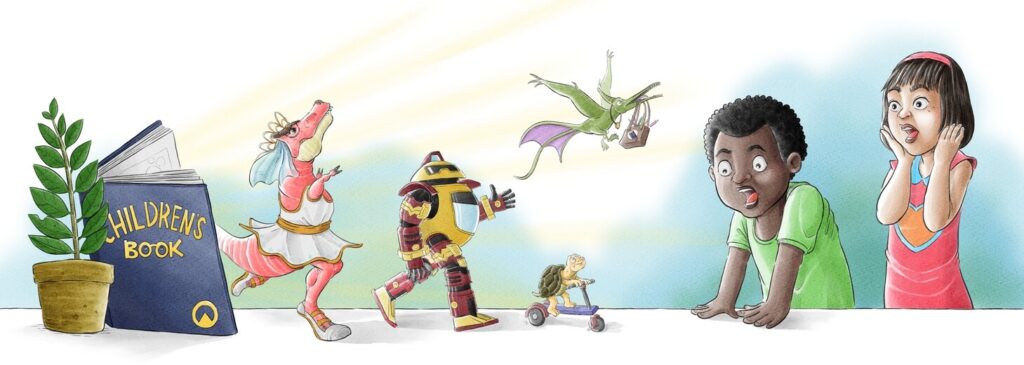
    Magic of Children's Book

    Hey there, awesome authors! Ever picked up a children’s book and just felt that spark? It’s not just paper and ink, you know. Oh no! Children’s books are pure magic. They are tiny portals to giant adventures. And guess what? We at Choppic absolutely adore creating them!

    So, what makes these books so special for your stories? Well, let’s dive into the enchantment. Prepare to be amazed!

    More Than Just Pretty Pictures (Though Ours Are Pretty Great!)

    Of course, beautiful illustrations are a huge part of it. But children’s books do so much more. They unlock new worlds. They introduce amazing characters. Also, they teach big lessons. All wrapped up in a cozy package. It’s like a warm hug for your brain!

    • Imagination Superchargers: These books are rocket fuel for young minds. Kids can soar with dragons. They can explore outer space. Or maybe even chat with a friendly monster. A great book makes anything possible!
    • Empathy Boosters: Stories help kids understand feelings. They learn about kindness. They also discover friendship. It’s like a secret training ground for emotional superpowers!
    • Curiosity Sparkers: Why is the sky blue? How does a seed grow? Children’s books often answer big questions. They also inspire new ones. Suddenly, the world is a giant puzzle to solve!

    Your Superpower: Delivering Big Messages in Little Packages

    Here’s where you, the brilliant author, come in! Children’s books aren’t just for bedtime stories. They are powerful tools. You can plant seeds of positive change. You can shape young minds. Imagine the impact!

    We just gave you a few ideas. Don’t limit your imagination, though!

    • Racial Harmony: Picture a thrilling space adventure! Your characters could be diverse alien species. They work together to save a galaxy. Kids learn that differences make us stronger. And that’s way more fun than just saying “be nice!”
    • Grit and Perseverance: How about a deep undersea voyage? Your hero faces huge challenges. Maybe a kraken, or a tricky current! They keep trying, no matter what. This teaches young readers about grit. They learn to never give up. Even when facing giant squid-like problems!
    • Cooperation and Teamwork: Think about a forest full of animals. A tiny squirrel needs help moving a big nut. Suddenly, all the creatures pitch in! This shows kids the power of cooperation. It’s much more engaging than a lecture. Plus, who doesn’t love talking animals?
    • Endless Possibilities! These are just few sparks to get your ideas flowing. What about messages on kindness to animals? Or environmental stewardship? Or even celebrating unique abilities? You have the incredible chance to put positive change into perspective. You can do this for young minds. It’s like being a superhero, but with words and pictures!

    Why We Love Being Part of the Magic (With You!)

    Here at Choppic, we get to be part of your enchantment. How cool is that?! Every project is a chance to sprinkle some visual fairy dust. We work hard to make sure our illustrations sing. They dance right off the page.

    • Bringing Characters to Life: We love creating characters. We give them silly grins. Maybe a brave stance. Or even a thoughtful twinkle in their eye. They become friends for life!
    • Building Dream Worlds: From enchanted forests to bustling cities, we craft every detail. We want kids to feel like they can step right inside. And trust me, our imaginary worlds have comfy chairs. And often, snacks!
    • Connecting Hearts: Ultimately, our goal is simple. We want to connect with young readers. We want to help parents connect with their children. A shared story is a special moment. It truly builds bonds.

    So, What’s Your Powerful Story?

    Children’s books hold a unique power. They inspire. They teach. And most importantly, they bring immense joy. So, next time you pick one up, remember the magic within. It’s a wonderful journey for everyone!

    What positive message are you ready to bring to young minds? We can’t wait to help illustrate it!

  • Behind the Art: My Fun Children’s Book Illustration Process!

    Ever wondered what happens behind the scenes? You know, when an illustration magically appears? Well, it’s a journey I absolutely adore! It’s so much more than just drawing lines. For me, creating children’s book illustrations is a thoughtful process. It transforms a tiny idea. Then, poof! It becomes a vibrant, finished piece of art.

    So, grab your favorite brew! Coffee, tea, or even a juice box will do. Let me walk you through my workflow. We’ll go from that initial flicker of inspiration. All the way to the final artwork you see in a book. It’s an adventure, really!

    1. The Idea Generation: Where Stories Start Their Whisper

    Every illustration kicks off with an idea. Usually, it’s sparked by a cool manuscript. This is when I really dive into the author’s words. I read and reread. I let the story just settle in. I imagine all the characters. The settings pop up too. And, of course, all the emotions.

    • Diving Deep: I’ll highlight key moments. I visualize character expressions. Then, I think about the overall mood. Is it super whimsical? Perhaps wildly adventurous? Or maybe quietly reflective?
    • Brainstorming Visuals: This part isn’t about drawing yet. It’s about mental imagery. I ask myself big questions. How does this character feel? What kind of world do they live in? What visual metaphors can I use? Sometimes, I just jot down keywords. Or quick, messy visual notes. It’s like my brain is having a party!
    • Reference Gathering: Does the story have unique animals? Maybe a specific historical setting? Or even a quirky object? I’ll start gathering visual references. This isn’t for copying, by the way! It helps me understand anatomy. Also textures and context. This ensures accuracy and believability. It makes the imaginative world feel real!

    2. Sketching: Bringing Concepts to Life (Roughly, Like a First Draft!)

    Okay, so I have a good grasp of the concept. What’s next? Time to get those ideas onto the screen! This is the sketching phase. Things are still super loose here. Flexibility is the key!

    • Thumbnail Sketches: I start with tiny, quick sketches. Sometimes they’re no bigger than a postage stamp! These “thumbnails” are made directly in my digital workspace. They help me explore compositions. Also, different character poses and page layouts. I don’t get stuck on details yet. It’s all about finding the strongest visual story.
    • Rough Layouts: A few thumbnails will look promising. Then, I’ll expand them. They become slightly larger digital sketches. Here, I focus on the overall flow of the spread. How will the text fit? Are the key story elements clear?
    • Character Studies: Is there a brand-new character? I’ll spend time sketching them digitally. I draw them from different angles. I explore their expressions and body language. This helps me understand their personality. It also ensures consistency throughout the book. This stage often involves lots of digital “erasing.” And redrawing! It’s all part of the discovery. Like a mad scientist, but with pencils!

    Seeking Your Approval: The First Nod

    Before I zoom forward, your approval is essential! This is our first dedicated revision point. I’ll show you these pencil sketches. Then, we can chat about your feedback. We’ll work together to make any needed adjustments. Your input here ensures we’re perfectly aligned. This happens before adding any color. Phew, alignment achieved!


    3. Digital Painting: Bringing the Vision to Life (With Lots of Colors!)

    Alright, your rough layouts have the green light! Now, it’s time to dive into the vibrant world of digital color. This is where industry-standard tools truly shine. They allow for incredible precision. Plus, a vast array of creative possibilities.

    • Laying Down Foundations: I primarily work in professional software. Think Adobe Photoshop or Clip Studio Paint. I build up the illustration in layers. I start by establishing base tones. This sets the overall mood of the scene with flat colors.
    • Adding Depth and Detail: This is where the real magic happens! I meticulously add shadows. Also, highlights and intricate textures. This brings dimension and richness to every element. Digital brushes let me mimic many effects. From soft watercolors to bold linework. All with the flexibility to refine and adjust. It’s like having a superpower!
    • Experimentation: One huge benefit of working digitally is freedom. I can easily try out different color palettes. I can adjust lighting scenarios. Or tweak character expressions. All without committing to just one path. This iterative process ensures the final artwork is truly the best.

    Seeking Your Approval: The Color Check

    After the digital painting is mostly done, I’ll show you the artwork. It will have the full color scheme. Your approval on these color choices is the next crucial step. This is our dedicated color revision point. We’ll fine-tune the palette here. This ensures it perfectly captures the book’s mood and vision. We’ll make sure it’s just right!


    4. Refining and Finishing Touches: The Polish (Making it Sparkle!)

    Okay, the colors have your approval! Now, I move into the final stage. This is where the illustration truly comes alive. It goes from a well-rendered image. Then, it becomes a polished piece ready for print.

    • Final Color Refinement: I’ll make any final tweaks to the color palette. This is based on your feedback. It ensures the right mood. It’s also appealing to young readers. This includes balancing bright and soft tones. And making sure colors are consistent. Across all illustrations, mind you!
    • Adding Those Fine Details: I’ll add those tiny, heuristic details. You know, the ones that invite discovery! A little ladybug on a leaf. A subtle pattern on a character’s clothing. Or the texture of a wooden floor. These small touches are meticulously placed digitally. They add serious depth and richness.
    • Lighting and Atmosphere: I focus on how light plays with the scene. Also, with the characters. I add shadows and highlights. This creates depth and atmosphere. It helps define the time of day. The weather too! And the overall feeling of the illustration.
    • Final Review: Before sending anything to you, I do a thorough self-review. I zoom in, then zoom out. I check for consistency and clarity. I make sure every pixel supports the story. Sometimes, I even step away for a bit. Then I come back with fresh eyes. This helps me catch anything I might have missed. Sneaky pixels!

    5. Final Deliverables: Layered Files for Ultimate Flexibility (It’s Like Magic, But Practical!)

    My commitment is to give you the finished artwork. These are layered illustration files. Usually, they’re in Photoshop (.PSD) or Clip Studio Paint (.CLIP) format. You might ask, “Why layered files?” It’s better than a flat image, honestly. It’s all about flexibility! And future-proofing your project!

    • Ease of Future Edits: Need minor adjustments down the line? Maybe a small text change? This might need shifting an element. Or preparing artwork for e-books or merchandise. Layered files make these changes super easy. And less costly! Elements can move, scale, or edit independently. Without messing up the rest of the illustration. Pretty neat, huh?
    • Separation of Elements: Different components are kept on separate layers. Like characters, backgrounds, foregrounds. Sometimes even lighting effects! This lets designers or publishers manipulate parts individually. Great for various layout needs.
    • Quality Control: Layered files keep the highest quality. They offer transparency. And no loss of detail or color fidelity. Even during further production. It’s top-tier stuff!

    Bringing a children’s story to life through illustration is truly a labor of love. It’s a blend of artistic skill and thoughtful process. Each digital stroke, from that initial whisper of an idea to the final polished artwork, ensures the visuals complement the words. But more importantly, they spark joy. And curiosity! And a lifelong love for reading in young hearts. It’s a truly rewarding journey, every single time. And that, my friends, is how the magic happens!

  • The Choppic Philosophy: The Heartbeat Behind Every Brushstroke (And Maybe a Few Giggles!)

    Here at Choppic, we pour our hearts into every children’s book illustration. Seriously, it’s more than just pretty pictures! In fact, we craft entire worlds. These worlds then leap right off the page. They also capture young imaginations. Our passion comes from some super cool core values. These principles guide our hands and minds. They ensure every piece of art is as thoughtful as it is beautiful.

    Curious about our secret sauce? Let’s peek at the philosophy that makes Choppic truly unique. Don’t worry, no pop quizzes involved!

    Coherence: No More Character Confusion!

    Ever read a book where a character suddenly changes their outfit? It’s like, “Whoa, did I miss a page?” That’s jarring, right? So, coherence is super important to us. We make sure every element in our illustrations flows seamlessly. This includes everything from a tiny shoelace to a huge background. Our goal is a consistent, believable visual world. Young readers can totally get lost in the story. No visual hiccups allowed! Basically, the art should feel like a natural extension of the story. Like peanut butter and jelly!

    Heuristic Design: Unleashing Little Explorers!

    Kids are natural explorers. And guess what? We truly love that! Our heuristic design approach is all about hiding little surprises. We also tuck in intriguing details. Think of them as mini treasure maps. Kids can pause, look closer, and find something new with every reread. This goes beyond just showing the obvious. Instead, it sparks their curiosity. It makes them active story participants. Plus, it subtly sharpens their observation skills. Who knew art class could be so sneaky?

    Originality: Because Who Wants a Copycat?

    In a world full of stories, standing out is key. Originality lives at the heart of what we do. And yes, this means we’re all about human creativity! We promise all our art for your projects is 100% human-made. No robots drawing here, just our skilled illustrators. We truly believe in the unique touch of a human hand and mind. This ensures every character feels fresh, vibrant, and totally unforgettable. Plus, the worlds we build are truly one-of-a-kind. We’re not just different for the sake of it. We infuse each project with a distinct creative spark. This brings authentic artistry. Ultimately, your story will carry its own special magic and charm. Ta-da!

    Precision: Spotting Every Tiny Detail!

    Kids are like super-sleuths; they don’t miss a thing! That’s why precision is a big deal in our studio. We obsess over age-appropriate details. We ensure every tiny element is thoughtfully and meticulously drawn. This might mean getting a character’s exact facial expression just right. Or, it could mean perfecting the little buttons on their coat. Our goal is clear, inviting, and wonderfully detailed illustrations. They should truly be a joy for young eyes. Prepare for eagle-eyed kids!

    Professionalism: Your Journey, Smoothed Out!

    Bringing a children’s book to life is a big adventure. So, you deserve a partner you can totally count on. Our commitment to professionalism means we deliver top-notch work. We do this consistently and on schedule. We believe in crystal-clear communication. We also respect every deadline. This makes the whole experience feel super smooth and straightforward. It goes from our very first chat to the final delivery. Your vision really matters to us. Therefore, we handle it with all the dedication it deserves. We’re practically your book’s fairy godparents!

    Interpretive Illustration: When Words Come Alive!

    A truly great illustrator doesn’t just draw the words. Instead, they feel the story. They translate its essence into visuals. Interpretive illustration means we dive deep into your manuscript. We grasp its subtle nuances and emotions. Then, we weave them into powerful imagery. Our aim is to capture the exact mood. We also convey complex feelings. Thus, we truly enhance the narrative. This brings your words to life in a magical way. It resonates deeply with young audiences. Ultimately, it adds that extra layer of magic that only art can provide. Abracadabra!

    Contextual Elements: Every Detail Tells a Tale!

    When you look at our illustrations, nothing is by chance. Our focus on contextual elements means every single part of the illustration has a purpose. This could be a specific toy in the background. It might be how light streams through a window. Even the texture of a character’s clothing is carefully considered. Each detail supports the story. It adds depth to the world. Or, it subtly conveys information. This meticulous approach ensures every pixel adds to the narrative. And the visual impact? Boom! The world feels richer and much more alive.

    These core values are more than just a fancy list. Indeed, they’re the very foundation of every illustration we lovingly create at Choppic. They fuel our passion for crafting beautiful, meaningful, and incredibly engaging artwork. Children will want to revisit these pieces again and again. When you team up with Choppic, you aren’t just getting illustrations. Instead, you’re stepping into a partnership built on shared principles. All of this is dedicated to bringing your children’s story to its most vibrant, imaginative life.

    Fun fact: Take the first letter of each of our core values – Coherence, Heuristic design, Originality, Precision, Professionalism, Interpretive illustration, and Contextual elements – and you get CHOPPIC! Coincidence? We think not!

    Ready to make some magic?